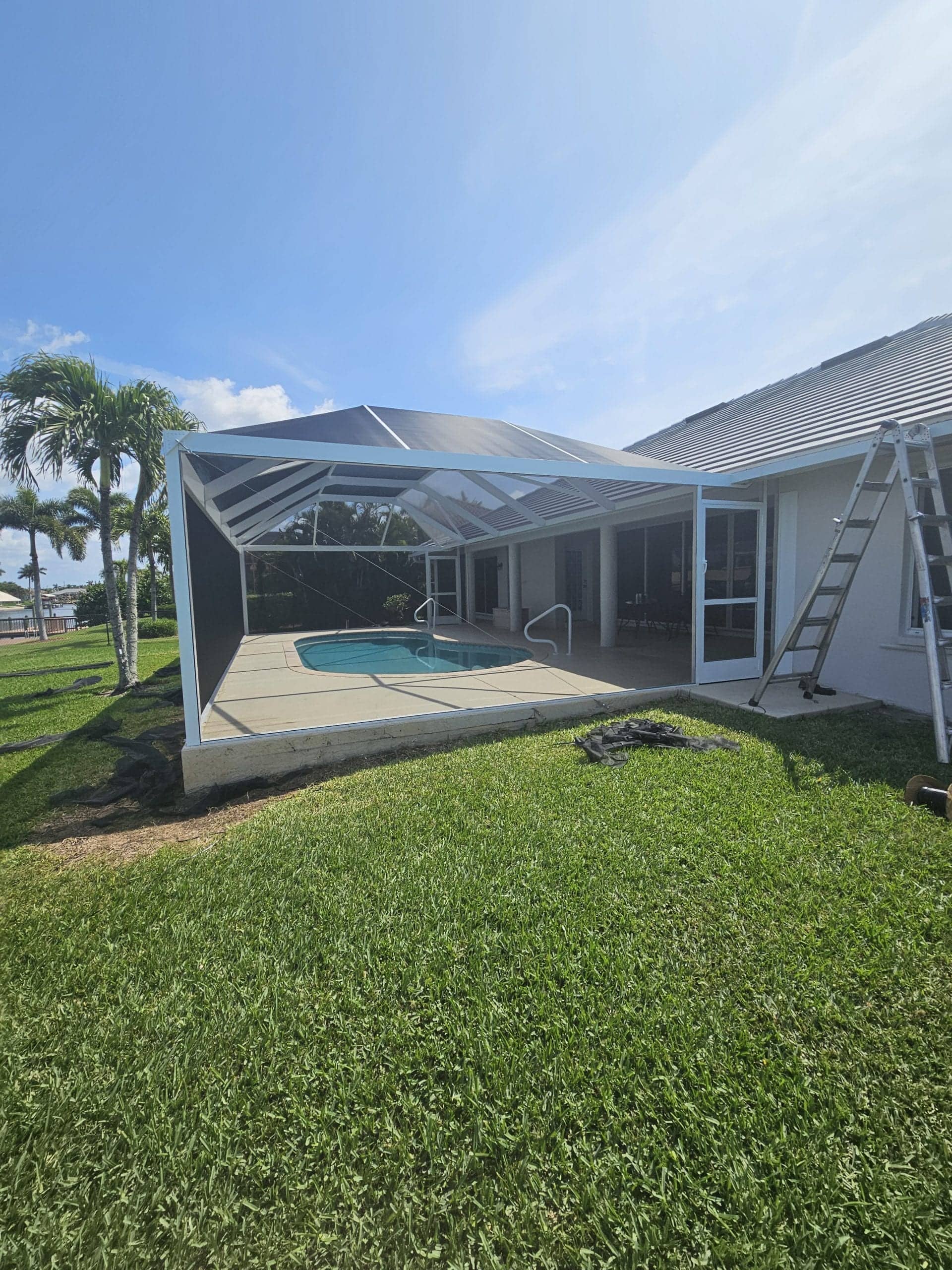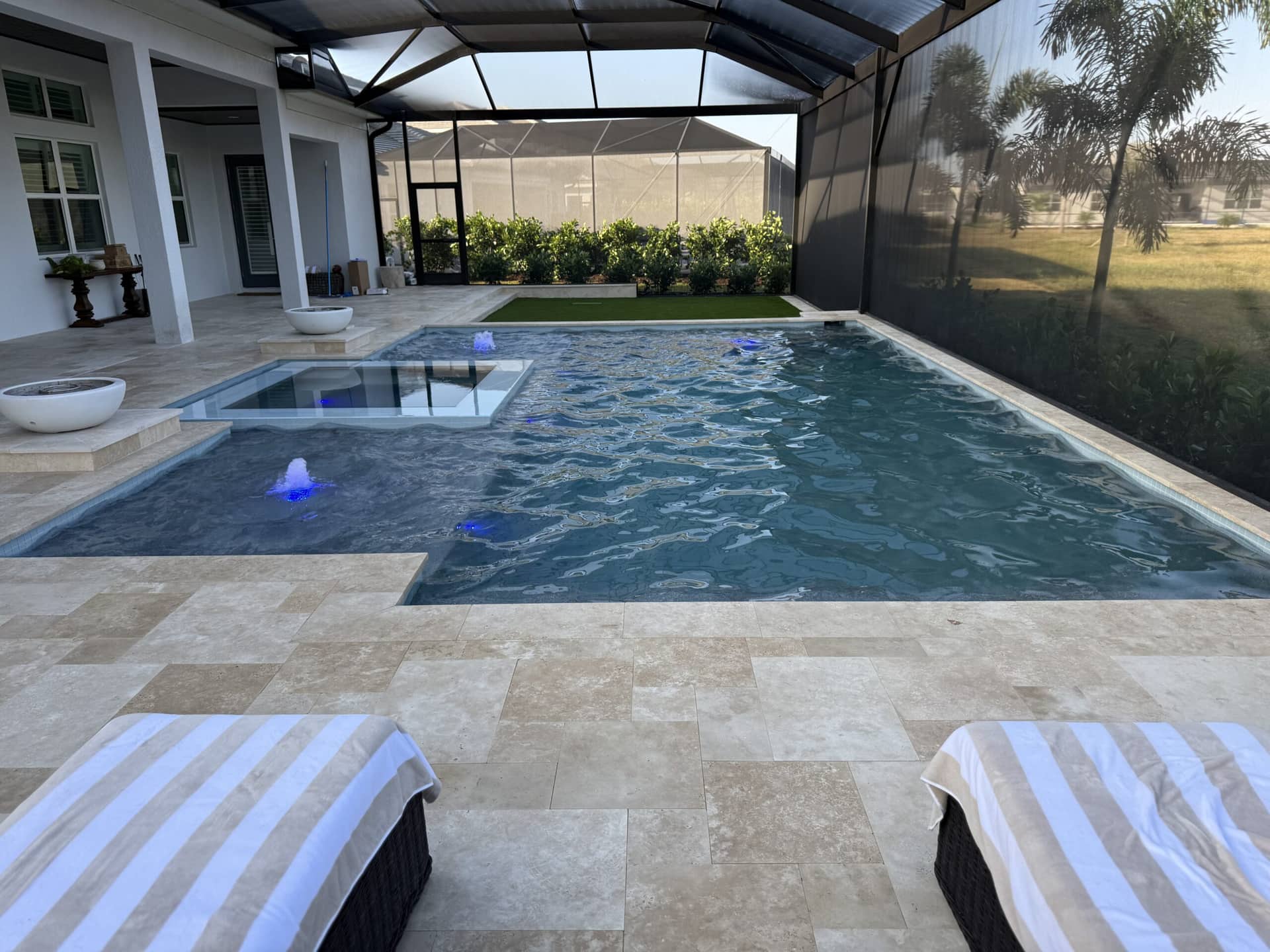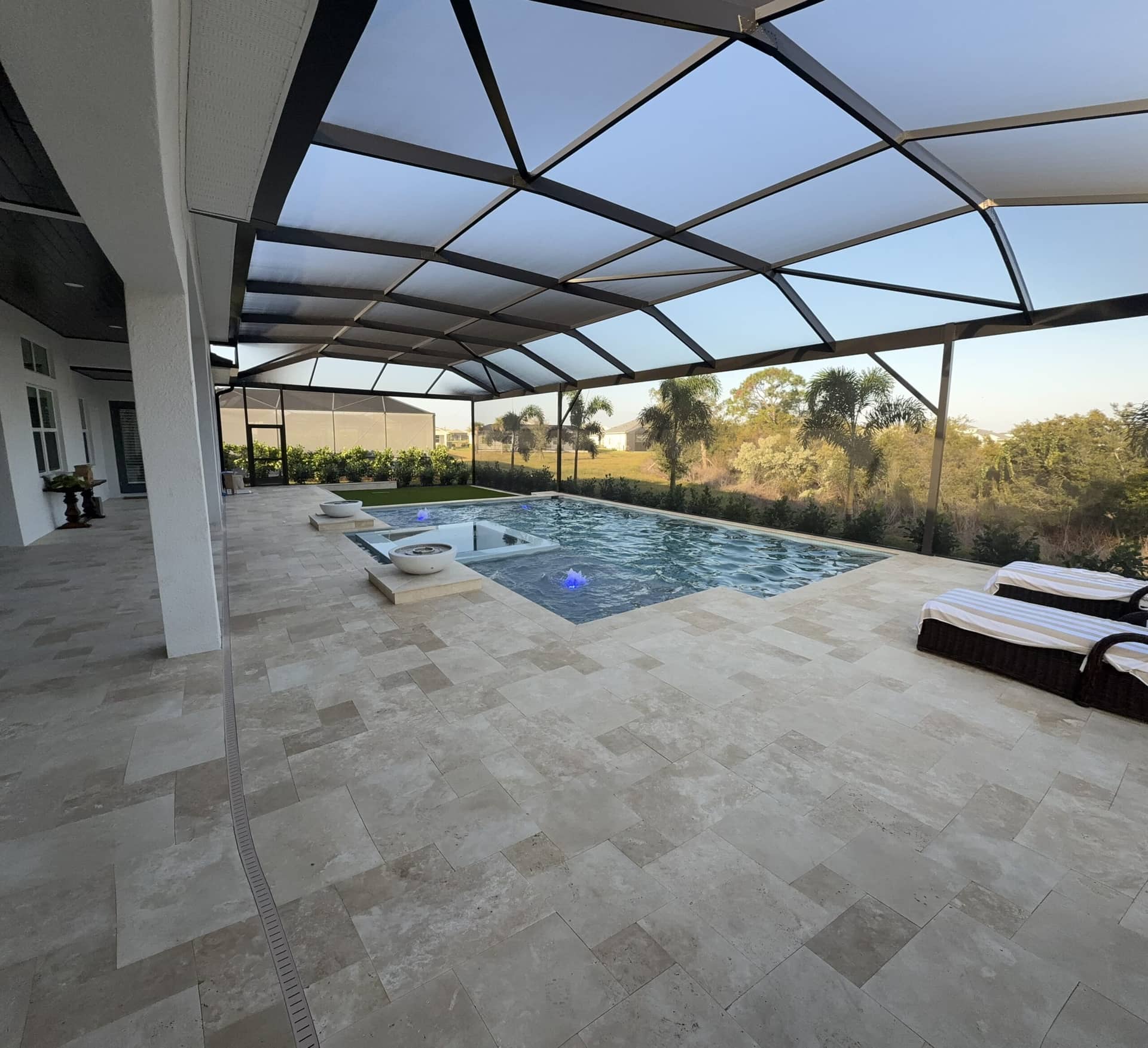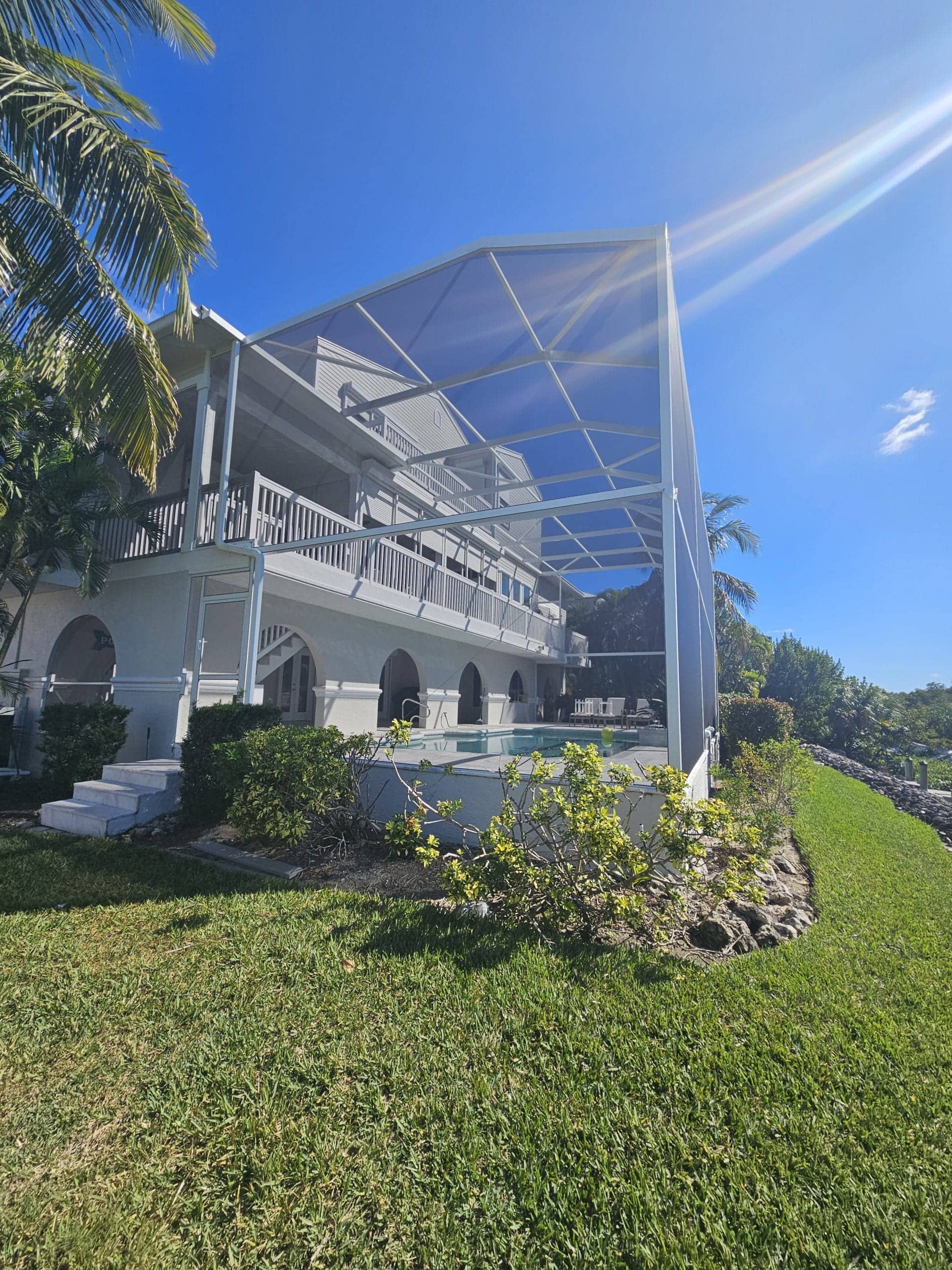
Ocala has a large stock of homes built in the 1970s–1990s with original pool shells. Twenty years in, almost every one of those pools needs something. The question is: resurface only, or go deeper?
What a 'resurface only' project really is
A true resurface strips the old plaster or Marcite to the gunite shell, acid-washes the surface, applies a bond coat, and shoots a new Pebble Tec finish. It takes 3–4 weeks and runs $9K–$16K on a typical 15 × 30 Ocala pool. If your pool holds water, your tile is intact, and your equipment is less than 10 years old — resurface only is probably all you need.
When a resurface is NOT enough
- Waterline tile is cracked or falling off (coping also probably needs replacement).
- You see rust bleeding through the plaster — rebar is corroding.
- The pool is losing more than ¼ inch of water per day with no obvious cause (shell crack or plumbing leak).
- Your equipment pad is 15+ years old and running inefficient single-speed pumps.
- You hate the shape — a resurface won't fix a layout you never liked.
A full renovation, step by step
Full renovations run $28K–$65K depending on scope. On a typical Ocala remodel we strip plaster, demo waterline tile and coping, repair any structural beam defects, re-plumb the suction and return lines if they're PVC Schedule 40 from the 70s, replace skimmer baskets and main drain covers to current VGB code, install a new variable-speed pump and salt or ozone sanitation, and finish with new tile, coping and Pebble Tec. Timeline: 6–8 weeks.
The hybrid: resurface + equipment
The most common scope we quote in Ocala is a mid-level hybrid: Pebble Tec resurface, new tile, variable-speed pump, LED pool light, and a basic automation controller. Runs $18K–$26K and transforms both the look and the operating cost of the pool.
How to decide in five minutes
- Fill the pool to the mid-tile line. Mark it. Check 48 hours later.
- Walk the floor. Soft spots or chipping = resurface time.
- Check equipment labels. If any says "single speed" or is pre-2015 — replace during the project, not after.
- Look at the tile. If more than 10% is cracked, drummy or missing — add tile to the scope.
- Check the waterline grout. Crumbling grout under the tile usually means freeze-thaw damage; bond beam needs rebuild.